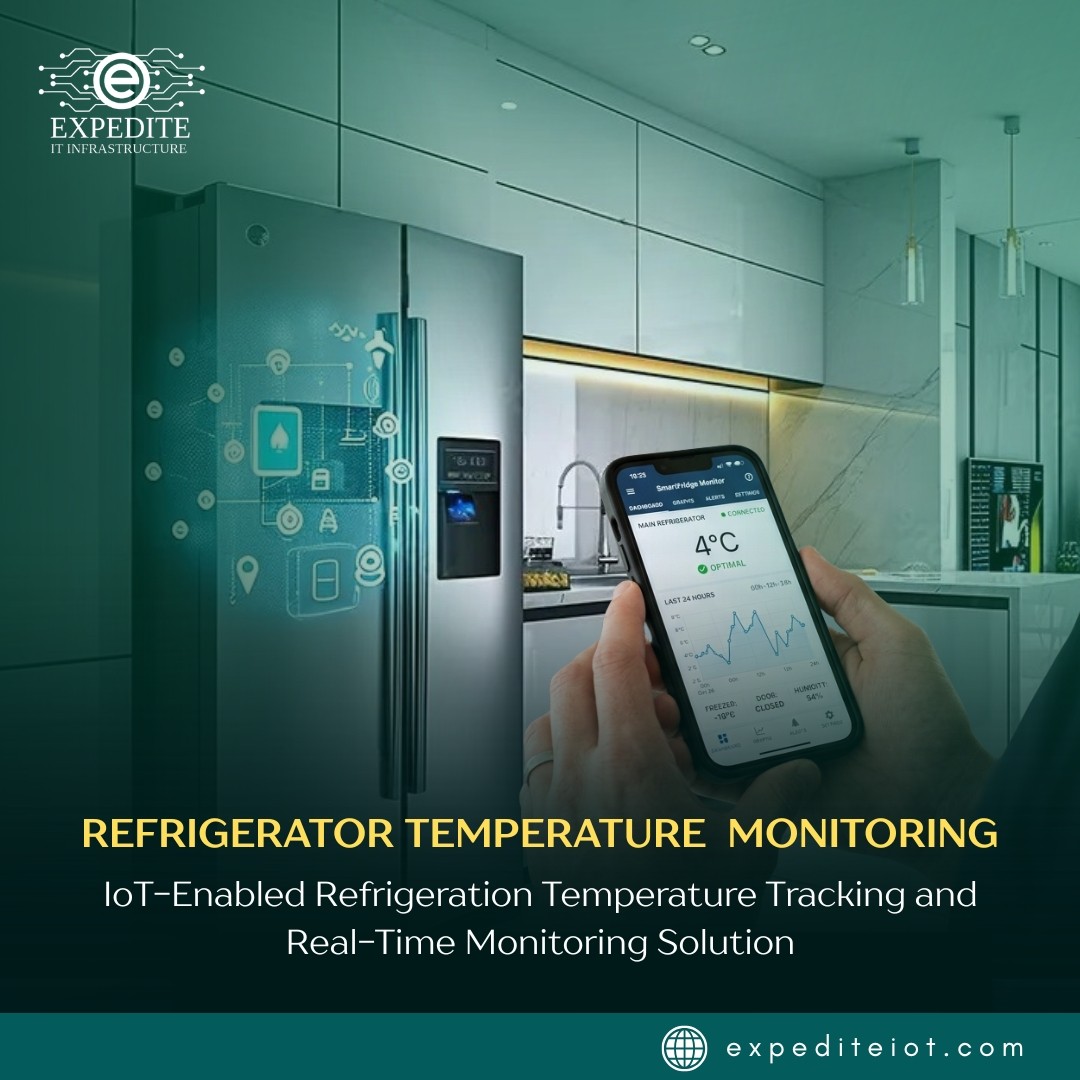
For hospitals, pharmaceutical distributors, blood banks, and research institutions operating in Qatar, an IoT Refrigerator temperature Monitoring system is the single most impactful cold-chain investment available. By deploying calibrated smart sensors, enterprise-grade temperature data loggers, and an intelligent temperature alerts platform, organizations gain the real-time visibility, the regulatory audit trail, and the predictive maintenance intelligence needed to protect patient safety and comply with Qatar's evolving pharmaceutical governance framework.
Whether your priority is JCI accreditation, MoPH compliance, vaccine cold-chain management, or simply the elimination of costly medication losses, Expedite IoT's Refrigerator Monitoring Qatar platform delivers the coverage, accuracy, and support your facility demands. Contact our Refrigerator Monitoring Doha team today to get started.
FAQs
1. What types of refrigeration units can an IoT Refrigerator Monitoring system cover?
A modern IoT Refrigerator Monitoring platform supports the full spectrum of cold-storage assets: pharmaceutical refrigerators (2°C–8°C), medical-grade freezers (−20°C to −30°C), ultra-low-temperature (ULT) freezers (−80°C), blood bank equipment (1°C–6°C for red cells), cryogenic liquid nitrogen storage (−196°C), and controlled room-temperature cabinets (15°C–25°C). All asset types are managed within a single dashboard, with asset-specific alert thresholds configured per unit.
2. How do temperature alerts reach staff outside business hours?
The temperature alerts engine supports multi-channel, time-aware escalation. Outside business hours, alerts are routed to on-call staff via SMS and push notification simultaneously. If the primary contact does not acknowledge within a configurable window (typically 5–10 minutes), the alert automatically escalates to a backup contact, then to a department supervisor. Every alert, acknowledgement, and corrective action is logged with a timestamp for regulatory audit purposes.
3. Are the smart sensors in your system approved for pharmaceutical use?
Yes. The smart sensors used in Expedite IoT's deployments are calibrated to NIST/ISO/IEC 17025 traceable standards and meet WHO PQS E006, USP 1079, and EU GDP requirements for pharmaceutical cold-chain monitoring. Annual recalibration certificates are provided as standard, and sensor calibration history is maintained in the platform's audit log — directly satisfying Qatar MoPH inspection requirements.
4. What is the difference between remote temperature monitoring and traditional data loggers?
Remote temperature monitoring delivers live data to a cloud dashboard with instant temperature alerts, whereas temperature data loggers record data locally and require manual retrieval. For ongoing facility monitoring — where the value is in catching an excursion within minutes, not hours — IoT remote temperature monitoring is the appropriate solution. Traditional temperature data loggers remain useful for single-journey transport validation where cloud connectivity is not available during transit.
5. How quickly can Expedite IoT deploy a Refrigerator Monitoring Qatar system?
For a standard hospital pharmacy or laboratory deployment of up to 30 refrigeration units, Expedite IoT's Refrigerator Monitoring Qatar team can complete site survey, hardware installation, sensor calibration, dashboard configuration, and staff training within 5–7 working days. Larger installations covering multiple floors or multi-site campuses are scoped individually.
Contact Us:
+966 5021 04086