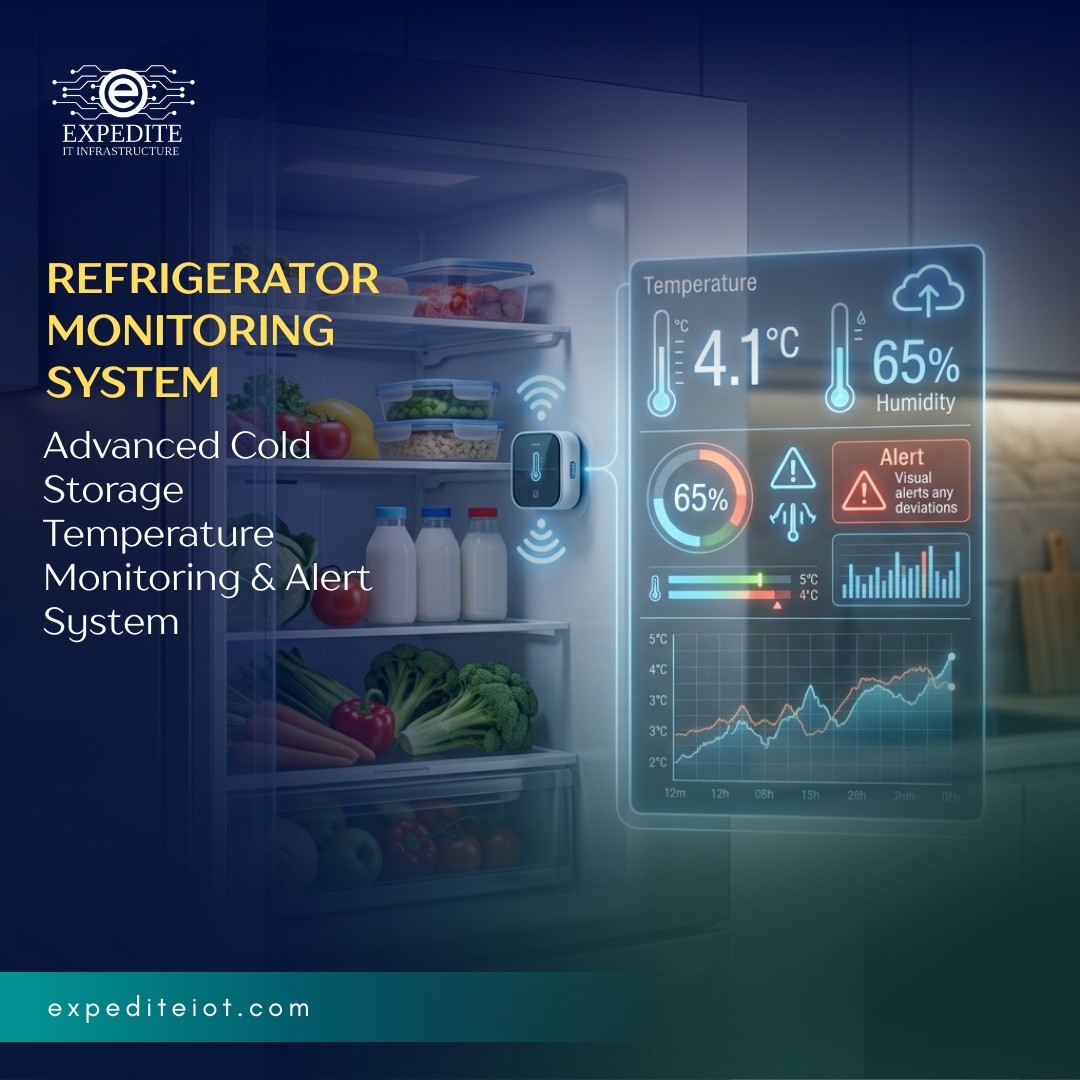
Refrigerator Monitoring is no longer optional for healthcare and life sciences organizations — it is a regulatory mandate, a patient safety obligation, and an operational necessity. Across Qatar's rapidly expanding hospital networks, pharmaceutical manufacturing campuses, and biomedical research institutions, maintaining precise cold-chain integrity is the difference between a viable medication and a discarded batch worth thousands of riyals.
Traditional manual log-sheets and standalone thermometers cannot meet the real-time visibility demands of modern cold-chain governance. The solution — an end-to-end IoT-powered Refrigerator Monitoring system equipped with smart sensors, cloud-connected dashboards, and instant temperature alerts — is transforming how Qatar's most critical facilities protect their valuable inventory and maintain regulatory compliance.
The Cold-Chain Risk Landscape in Qatar's Healthcare Sector
Qatar's healthcare infrastructure has grown dramatically over the past decade, anchored by flagship facilities such as Hamad Medical Corporation, Sidra Medicine, and a proliferating network of specialty clinics and pharmaceutical distribution hubs. Each of these environments stores temperature-sensitive assets — vaccines, insulin formulations, oncology biologics, blood products, diagnostic reagents, and compounded sterile preparations — whose efficacy is entirely dependent on unbroken cold-chain management.
The consequences of a cold-chain failure are severe. According to the World Health Organization, approximately 50% of global vaccines are wasted annually due to temperature excursions. In Qatar's climate, where ambient temperatures routinely exceed 45°C in summer, power fluctuations or equipment malfunctions can push refrigerator temperatures outside the required 2°C–8°C range within minutes — long before a manual check would detect the deviation. A single undetected excursion in a hospital pharmacy can render an entire batch of high-value biologics non-viable, triggering regulatory scrutiny, financial loss, and — most critically — compromised patient care.
Contact Us:
+966 5021 04086