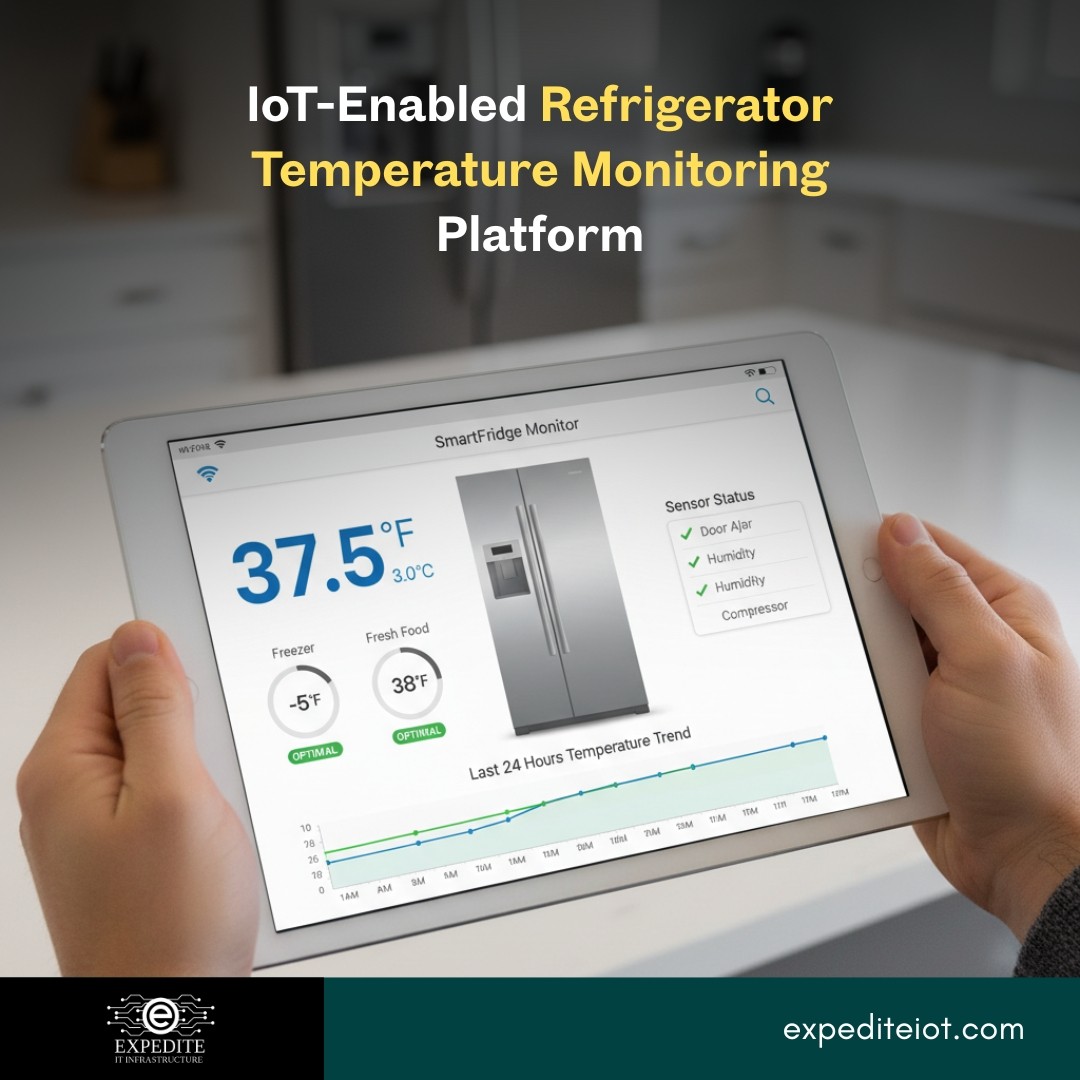
For food businesses, pharmaceutical operators, healthcare facilities, and hospitality groups across Qatar, the UAE, and the GCC, intelligent Refrigerator Monitoring is no longer an optional upgrade — it is the operational and regulatory baseline that protects inventory, patients, brand reputation, and regulatory licences simultaneously. The convergence of calibrated Smart Sensors, Wireless Temperature Monitoring, compliance-grade Temperature Data Loggers, and intelligent multi-channel Temperature Alerts within a single, centrally managed platform gives GCC operators the comprehensive cold chain visibility their businesses and regulators demand.
Whether your organization manages a single hospital pharmacy cold room in Doha, a network of hotel food storage facilities across Dubai, or a regional pharmaceutical distribution warehouse in Abu Dhabi, Tektronix LLC delivers a refrigerator and cold chain monitoring solution engineered for GCC conditions, validated against GCC regulatory requirements, and supported by a local team with the expertise to ensure your deployment delivers maximum compliance value from day one.
FAQs
1. What types of refrigeration and cold storage assets can the monitoring system cover?
The platform is asset-agnostic and supports monitoring across the full spectrum of cold storage equipment: domestic and commercial refrigerators and freezers, pharmaceutical cold rooms and cabinets, blast chillers, walk-in cold stores, cryogenic freezers, controlled atmosphere storage chambers, and refrigerated transport vehicles. A single platform instance can simultaneously monitor assets operating across temperature ranges from -196°C (liquid nitrogen cryogenic storage) to +25°C (ambient-controlled pharmaceutical storage), with each asset configured with its own independent threshold parameters, alert contacts, and compliance reporting schedule. This flexibility makes the solution equally applicable to a hospital blood bank, a hotel central kitchen, a vaccine distribution centre, and a catering company's fleet of refrigerated delivery vehicles.
2. What happens to monitoring data during a power outage or internet connectivity failure?
Continuous data integrity is maintained through two independent resilience mechanisms. First, the temperature data logger function built into each sensor stores readings locally in non-volatile memory, buffering up to 30 days of readings that are automatically synchronized to the cloud platform upon connectivity restoration — ensuring no gap in the compliance record. Second, local gateway devices are supplied with battery backup power, maintaining the wireless sensor network and local alert generation even during mains power interruptions. For facilities in Qatar and the GCC where power fluctuations are a known operational risk, this dual-resilience architecture ensures that a power event never creates a compliance record gap or compromises the facility's ability to document cold chain integrity.
3. How does the system generate compliance reports for food safety and pharmaceutical regulatory submissions?
The platform includes an automated compliance reporting module that generates audit-ready documentation on configurable schedules — daily, weekly, or monthly — without requiring any manual data compilation. Reports include time-stamped temperature logs for each monitored asset, excursion event summaries with duration and maximum deviation data, corrective action records linked to each excursion event, mean kinetic temperature (MKT) calculations for pharmaceutical GDP compliance, and sensor calibration status confirmation. Reports are generated in PDF format with tamper-evident digital signatures and can be automatically emailed to designated quality managers, pharmacists-in-charge, or regulatory liaison officers — meeting the documentation requirements of Qatar MoPH, UAE MOCCAE, ADAFSA, DHA, and WHO GDP standards.
4. How quickly can the system be installed, and is it disruptive to ongoing cold storage operations?
Installation is deliberately designed to be minimally disruptive. For a standard deployment covering 10–20 refrigeration units in a single facility, Tektronix LLC's technical team completes sensor installation, gateway commissioning, cloud platform configuration, and user training within one to two working days — with no requirement to take refrigeration units offline or interrupt cold storage operations. Battery-powered wireless sensors are mounted inside refrigeration units using food-safe adhesive brackets, with no cabling required between the sensor and the external gateway. The cloud platform is pre-configured with the client's specific alert thresholds, escalation contact lists, and compliance reporting schedules before the installation date, enabling live monitoring to commence within hours of the first sensor being commissioned.
5. How are sensors calibrated, and how often does calibration need to be renewed to maintain regulatory compliance?
All sensors supplied by Tektronix LLC are factory-calibrated to ±0.1°C accuracy and shipped with individual calibration certificates traceable to national and international measurement standards. For regulatory compliance purposes — particularly under WHO GDP, HACCP, and pharmaceutical storage guidelines — sensors typically require recalibration annually, although some regulatory frameworks specify more frequent calibration for high-criticality applications such as vaccine cold rooms and blood bank refrigerators. Tektronix LLC's UAE and Qatar-based calibration teams provide on-site annual recalibration services, issuing updated calibration certificates that are automatically linked to the relevant sensor record in the cloud platform — ensuring that compliance documentation always reflects current, valid calibration status without requiring the client to manage this process independently.
Contact Us:
+966 5021 04086