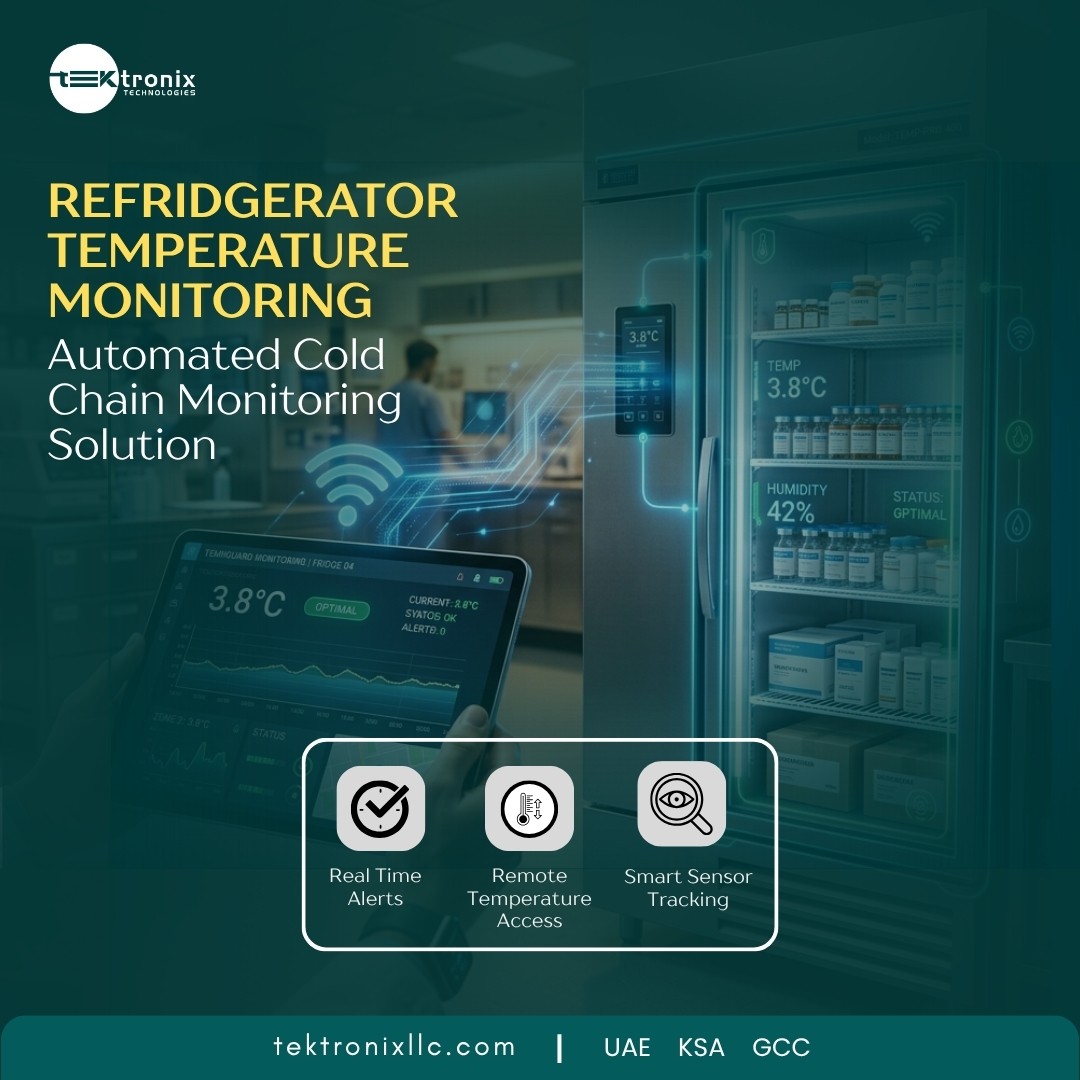
The GCC food distribution sector stands at an inflection point. Consumer expectations, regulatory standards, and the sheer scale of cold-chain operations demand a step change from reactive temperature management to proactive, data-driven Refrigeration Monitoring. The convergence of smart sensors, wireless temperature monitoring, temperature data loggers, and intelligent temperature alerts creates a monitoring ecosystem that is both technically robust and commercially justified.
For food distribution centres operating in Bahrain and across the wider GCC, partnering with an experienced regional provider is as important as the technology itself. Tektronix LLC's Refrigeration Monitoring solutions combine global sensor technology with GCC-specific deployment expertise — delivering the cold-chain assurance that regulators, retail customers, and consumers require. Whether you are building a greenfield distribution centre or upgrading legacy monitoring infrastructure, the time to act is before the next excursion, not after it.
FAQs
1. What is the difference between Refrigeration Monitoring and Temperature Monitoring?
Refrigeration Monitoring is a specialised application of Temperature Monitoring focused specifically on mechanical refrigeration systems — cold rooms, walk-in freezers, refrigerated trucks, and display cases. Temperature Monitoring is a broader discipline that includes ambient room monitoring, server room thermal management, and industrial process control. In food distribution contexts, the two terms are frequently used interchangeably, but Refrigeration Monitoring implies additional visibility into refrigeration plant performance metrics such as compressor run-time, defrost cycles, and condenser temperatures.
2. How do wireless temperature monitoring systems handle connectivity outages?
Enterprise-grade wireless temperature monitoring systems handle connectivity gaps through on-device data buffering. Sensors store readings locally (typically up to 30–90 days of data depending on sample interval) and upload automatically once connectivity is restored. Redundant communication paths — such as dual Wi-Fi and cellular fallback — are also recommended for critical facilities to ensure continuous data transmission even when primary network infrastructure is unavailable.
3. How often should temperature data loggers be calibrated in GCC conditions?
The industry standard for temperature data logger’s calibration in food and pharmaceutical distribution is annually, with additional calibration recommended after any physical impact or if a sensor reading appears anomalous. In GCC conditions — where extreme heat, high humidity, and frequent thermal cycling accelerate sensor drift — a six-month calibration cycle is advisable for sensors installed in high-risk zones such as loading dock interfaces and frequently opened cold room doors.
4. What regulatory standards govern Refrigeration Monitoring in Bahrain and the GCC?
Key regulatory frameworks governing Refrigeration Monitoring in GCC food and pharmaceutical operations include: The Gulf Standardisation Organisation (GSO) food safety standards; the Saudi Food and Drug Authority (SFDA) Good Distribution Practice guidelines; the UAE Federal Food Safety Law (Law No. 10 of 2015); Bahrain's Ministry of Industry, Commerce and Tourism food handling regulations; and, for pharmaceutical cold chains, WHO Technical Report Series 961 on GDP. All frameworks require documented temperature records, defined excursion response procedures, and periodic equipment qualification — all of which are systematically supported by a properly configured monitoring platform.
5. Can remote temperature monitoring integrate with existing warehouse management systems?
Yes. Modern remote temperature monitoring platforms provide open API integration (REST/JSON) that connects to leading warehouse management systems (WMS), enterprise resource planning (ERP) platforms such as SAP and Oracle, and laboratory information management systems (LIMS) used in pharmaceutical operations. This integration enables temperature compliance data to be embedded directly into batch records, delivery documentation, and quality management workflows — eliminating the data silos that make multi-system compliance auditing unnecessarily complex. Tektronix LLC's implementation team provides configuration support for all major GCC-deployed WMS and ERP environments.
Contact Us:
00971 58 8899612