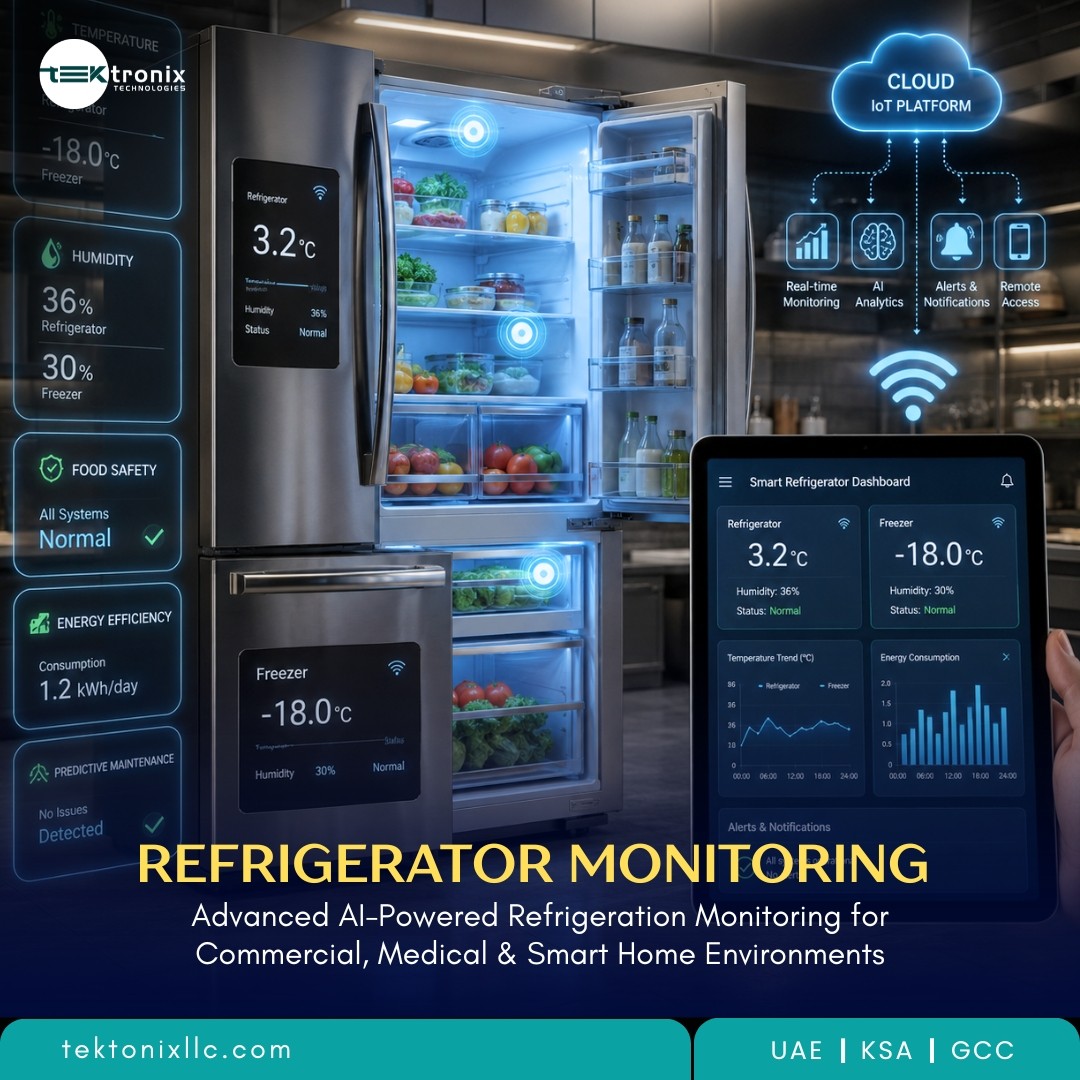
Automated refrigerator monitoring is no longer a luxury for GCC industries — it is a regulatory imperative, a product integrity safeguard, and a competitive differentiator. As Saudi Arabia accelerates its Vision 2030 healthcare and food sector transformation, and as GCC-wide digitization initiatives raise the bar for operational transparency, organizations that invest in intelligent cold-chain monitoring will be better positioned to meet compliance requirements, protect high-value inventory, and maintain the trust of regulators and customers alike.
Tektronix LLC delivers purpose-built Refrigerator Monitoring solutions for KSA and GCC industries — combining certified smart sensor hardware, wireless deployment flexibility, real-time remote visibility, proactive alert systems, and audit-ready data logging into a single, regionally supported platform. Whether you operate a hospital pharmacy in Riyadh, a pharmaceutical warehouse in Jeddah, a food manufacturing plant in Dubai, or a biobank in Manama, Tektronix LLC has the expertise and technology to secure your cold chain.
FAQs
1. What industries in Saudi Arabia require automated refrigerator monitoring?
Any industry handling temperature-sensitive products in KSA is required or strongly incentivized to deploy automated cold-chain monitoring. Key sectors include pharmaceutical manufacturing and distribution (under SFDA regulations), hospital pharmacies and blood banks (per CBAHI and MOH standards), food processing and retail (under SASO and GSO food safety frameworks), clinical and research laboratories, and the expanding hospitality and catering sector. NEOM and other Vision 2030 mega-projects also require compliant cold-chain management for medical and food supply operations.
2. How do wireless temperature monitoring systems work without direct wiring?
Wireless monitoring systems use battery-powered sensor nodes that communicate via Wi-Fi, LoRaWAN, Zigbee, or cellular (4G/5G) protocols to transmit temperature and humidity readings to a cloud-based platform. The sensor nodes are mounted inside or adjacent to refrigeration units and require no physical cabling back to a central controller. Data is encrypted in transit and at rest, ensuring security compliance. Battery life typically ranges from 2 to 5 years depending on transmission frequency and environmental conditions, minimizing maintenance overhead.
3. What regulatory standards do GCC refrigerator monitoring solutions need to comply with?
Regulatory requirements vary by country and industry sector. In Saudi Arabia, SFDA mandates are primary for pharmaceutical cold chain, with CBAHI standards governing hospital environments and SASO/GSO frameworks covering food safety. The UAE requires alignment with DHA (Dubai Health Authority) and DOH (Department of Health Abu Dhabi) for healthcare. Bahrain’s NHRA governs pharmaceutical and healthcare cold chain. Qatar’s Ashghal and MOPH (Ministry of Public Health) set infrastructure and healthcare standards respectively. Kuwait’s MOCI oversees food safety compliance. WHO GDP guidelines and ISO 17025 apply across all GCC laboratory environments.
4. How quickly do temperature alerts notify responsible personnel during an excursion?
Tektronix LLC’s platform delivers multi-channel temperature alerts within seconds of a threshold breach being detected. Notifications are dispatched simultaneously via SMS, email, and mobile push alerts to pre-configured primary contacts. If the alert is not acknowledged within a user-defined escalation period (typically 5–15 minutes), the system automatically notifies secondary and tertiary contacts, including facility managers and quality assurance supervisors. This escalation architecture ensures that no temperature excursion goes unaddressed, significantly reducing product loss risk and regulatory exposure.
5. Can a single platform monitor refrigerators across multiple GCC countries simultaneously?
Yes. Tektronix LLC’s cloud-based refrigerator monitoring platform supports multi-site, multi-country deployments from a single unified dashboard. Enterprise operators with facilities in Saudi Arabia, UAE, Qatar, Kuwait, Bahrain, and Oman can monitor all locations in real time, configure country-specific alert thresholds and compliance parameters, and generate jurisdiction-appropriate audit reports from one interface. Role-based access control ensures that site managers see only their relevant locations while corporate quality teams maintain full visibility across the entire network.
Contact Us:
00971 58 8899612