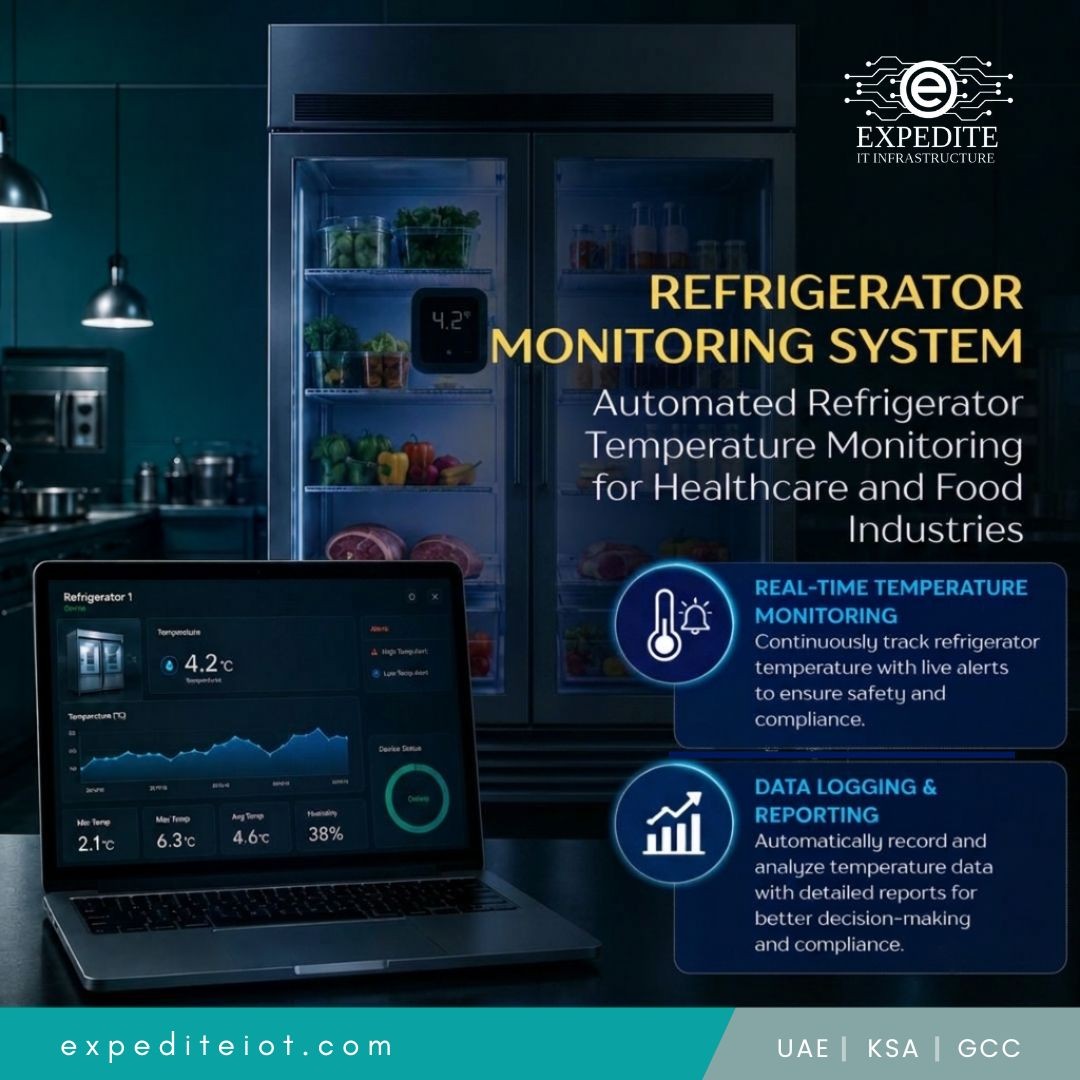
Reliable cold chain management is no longer optional for Saudi Arabia's food, healthcare, and pharmaceutical sectors. Refrigerator Monitoring, supported by accurate Temperature Monitoring, connected Smart Sensors, dependable Temperature Data Loggers, Remote Temperature Monitoring, and Wireless Temperature Monitoring, gives operators the continuous visibility needed to meet SFDA and SASO expectations while protecting product quality. Paired with instant temperature alerts, these systems convert raw data into timely action, preventing spoilage before it happens. Whether deploying Refrigerator Monitoring KSA-wide, Refrigerator Monitoring Riyadh for hospital and retail networks, or Refrigerator Monitoring Jeddah for port-linked cold storage, Saudi businesses now have the tools to protect both compliances standing and consumer trust.
FAQs
1. What is refrigerator monitoring and why does it matter for Saudi businesses?
Refrigerator monitoring is the continuous tracking of temperature and related conditions inside refrigeration units using connected sensors, replacing manual spot checks with real-time data. For Saudi businesses, it provides the documented evidence needed to satisfy SFDA inspections while protecting perishable food and pharmaceutical stock from spoilage.
2. How do smart sensors improve accuracy compared to manual temperature checks?
Smart sensors record readings continuously, often every few minutes, rather than relying on staff to check and log temperatures a few times per shift. This eliminates gaps between checks and removes the risk of human error or skipped readings.
3. Can remote temperature monitoring cover multiple locations across different Saudi cities?
Yes. A single cloud dashboard can display live data from refrigeration units in Riyadh, Jeddah, Dammam, and other cities simultaneously, allowing facility managers to oversee an entire branch network from one screen.
4. What happens when a temperature alert is triggered?
The system immediately notifies designated staff by SMS, email, or app notification. If the alert is not acknowledged within a configured time window, it automatically escalates to a supervisor, ensuring spoilage risks are addressed before significant loss occurs.
5. Is wireless temperature monitoring difficult to install in an existing facility?
No. Because sensors connect wirelessly rather than through fixed cabling, installation typically requires no structural changes or rewiring, making it suitable for existing kitchens, pharmacies, and cold storage facilities without operational downtime.
Contact Us:
+966 5021 04086